A printmaker is about to put a first collection on sale. She is choosing between €40 and €50. Friends have opinions about what a print this size ought to cost. The framer can tell her exactly what the mount costs. One of those conversations can go straight into a spreadsheet. The other needs a little work.
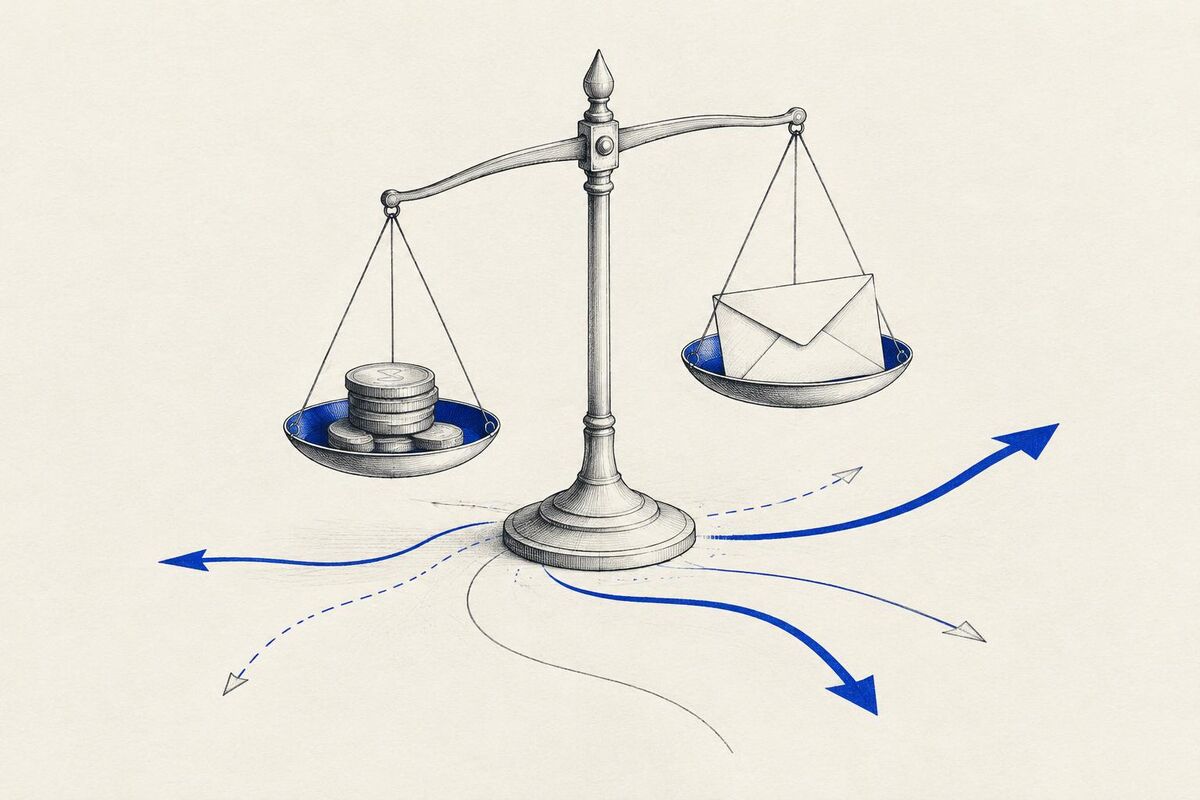
There is good evidence that the question “What would you pay?” describes a different situation from being able to buy. In a review of 77 studies, Jonas Schmidt and Tammo Bijmolt found that hypothetical estimates of willingness to pay exceeded estimates involving real economic consequences by 21% on average. The gap varied with the product and the research method. Subtracting 21% from what three friends say about a screen print would give their opinions a precision the research cannot support. 1
There is also a good reason to keep asking. In a study of a cleaning product, Klaus Miller and colleagues compared four ways of estimating demand with actual purchases in an online shop. Some survey methods could point toward a sensible pricing decision even when they misestimated what individuals would pay. A conversation can narrow the choice. It can also reveal that a buyer is mentally comparing a mounted print with an unmounted poster. That tells the maker what to explain before either price gets a fair hearing. 2
What the extra ten euros buy
Assume the maker receives €40 or €50 per sale after any sales tax. Making, packing and delivering a print costs €20 in either case, including an allowance for her time on each order. A sale at €40 therefore leaves €20 towards fixed costs and profit. At €50 it leaves €30. If the lower price sells 15 prints, the higher price needs to sell only ten to leave the same €300. That is a useful threshold to know before a single order arrives.
Consider a small, illustrative trial. For a limited run, comparable prospective buyers are randomly shown one of the two genuine offers. Both show the same print, the same frame options and the same delivery date, with sufficient stock. The maker honours the quoted price if the customer returns. One hundred eligible visitors see each offer. At €40, 15 buy. At €50, 11 buy.
| Price | Paid orders | Sales | Amount left after the €20 cost per order |
|---|---|---|---|
| €40 | 15 | €600 | €300 |
| €50 | 11 | €550 | €330 |
The lower price wins on orders and sales. The higher price leaves €30 more and takes four fewer prints to fulfil. That could matter a great deal to a maker with one press and a weekend to herself. It could matter rather less to someone trying to earn the first ten reviews for a new shop. State which decision the trial is supposed to settle before looking at the numbers.
There is a practical limit to this neat arithmetic. One fewer order at €50 would have produced a tie. A single return can erase the apparent advantage, particularly if the maker also pays for return postage. Treat this as a price worth trying for a further run. Keep a tally of orders ultimately kept, what it actually cost to fulfil them and whether one price attracts a different kind of commission enquiry. If offering different prices simultaneously would damage trust in a small community, publish one price for a clearly dated release and another for the next. Record the differences between the releases. A sold out Christmas market and a quiet Tuesday online give weak evidence about the effect of price alone.
For this maker, the first price is a working choice. She can now say exactly what would change her mind. If €50 keeps selling at least ten for every 15 she previously sold at €40 under similar conditions, the extra margin pays for the lower volume. If the press sits idle and the comparison keeps falling short, she has a reason to reconsider. That is a much better conversation to have with the framer.