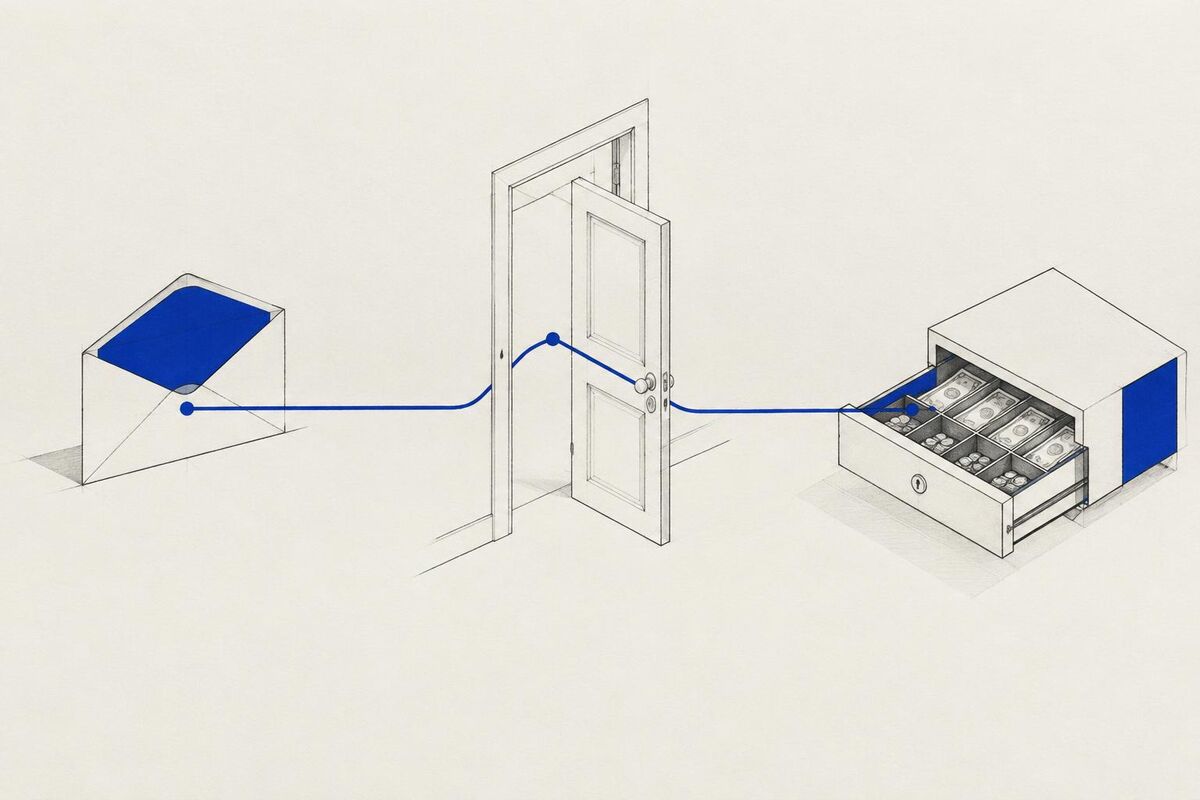
Suppose an architect asks a materials supplier at 16:50 on Friday whether a tile will arrive in time for installation. At 08:46 on Monday the enquiry is assigned to a salesperson. At 08:50 the salesperson sends the stock count and delivery date. One clock reads four minutes. The other reads 64 hours. Both are correct.
In its sales analytics documentation, updated in June 2026, HubSpot describes a lead response report whose clock starts when the contact is assigned to its current owner. It resets on reassignment. A qualifying interaction can include marking an internal task as in progress or complete. That is a useful report for a manager asking what happened to assigned work. A buyer with a tiler booked for Tuesday has a different interest. Their clock started on Friday, and nobody moving a task on a screen has answered their question. 1
What the famous speed study measured
In 2011, James Oldroyd, Kristina McElheran and David Elkington reported an audit of 2,241 US companies in Harvard Business Review. Almost a quarter of the companies gave no reply to the test enquiry. In a separate analysis of 1.25 million leads at 42 businesses, attempting to contact an enquirer within an hour was associated with a much better chance of having a substantive conversation with a decision maker. The outcome measured was qualification. A conversation could still end with the buyer choosing a competitor. 2
The often repeated five minute rule comes from earlier work. A 2007 report using InsideSales.com data examined phone attempts at six companies. It found sharply different odds of reaching and qualifying buyers depending on when the first call was placed. The analysis explicitly left closed sales outside its scope. These were observations about particular companies, buyers and telephone calls. The findings give a supplier good reason to investigate unattended enquiries. They cannot set a universal deadline for answering a bespoke specification by email. 3
Put the missing hours back into view
A small team can audit this without changing its CRM. Pick a recent week old enough for the promised response period to have elapsed. Collect every genuine new buying enquiry from each public route, including the enquiries that never made it into the sales system. Match the same buyer’s duplicate messages about the same job once. Preserve the time of their first message. For each enquiry, record when somebody took ownership, when the buyer first got a useful reply, and what happened next.
Define useful by reading the message. A reply with the tile’s availability and delivery date clearly counts. So can a request for the postcode if the supplier needs it to check delivery. An automated receipt is worth recording in its own column, especially if it sets an honest expectation. A buyer still waiting to hear whether the supplier can help belongs in the waiting column.
Show the number of unanswered enquiries alongside the time taken for those answered. If staff reply promptly to ten messages and overlook another ten, the median among answered messages can look wonderful. Also separate enquiries received during advertised hours from those arriving outside them. The 64 hours in the example describe the architect’s experience. Whether they indicate a staffing failure depends on the opening hours, Friday cutoff and promises the business actually made.
For the architect, a useful improvement might be a stock enquiry button that reaches the duty salesperson before the weekend cutoff. It might instead be an honest Friday message saying when a stock check is possible, with a way to reserve available stock online. To choose between them, find the first person who could have answered on Friday and ask when the message became visible to them. If the answer is Monday morning, a new response target for the salesperson would fix the only four minutes that were already working.